fbpx
  • Knowing your limits vs stretching your limits

    Knowing your limits vs stretching your limits

    T is big on ignoring pain and working through it nonetheless. When I’m attacked by bugs/struck by eczema, he keeps me in line, yelling at me when he notices me absentmindedly – or sneakily – reaching for an itch, and I’m often jostled out of sleep by him grabbing my hands to stop me scratching. When he manages to slice himself open, he simply carries on (no bandages, no dressings) and heals within a couple of days.

    Sometimes, this doesn’t work out so well. But I have to admire the general philosophy. Self-control and perseverance are fine virtues.

    Still, while I’m all for positive thinking, there are some things I can’t manifest away. My chronic sinus problems. The fact that I bruise at the merest brush up against another object. My digestive system’s dislike of Indian food. And even T can’t ignore his chronic back pain.

    I’m a bit of a day dreamer, but ultimately, I consider myself a realist. That’s just how I like to operate.

    But does that mean I sometimes sell myself short and give myself an out – using that as an excuse for not even trying?

    At indoor rock climbing recently (my second time) I was really struggling. It was a serious struggle to belay T (probably doesn’t help that’s he’s nearly triple my body weight), and I wasn’t doing all that great with my own climbing thanks to insane foot cramps (most people worry about excessive sodium intake; I usually don’t get enough and don’t realise it till agonising cramps set in at inconvenient times), hand swelling and cramps, general fatigue and my own lack of physical strength. Oh, and my fear of heights doesn’t help either. I think I only made it to the top of two walls out of five.

    I know that I didn’t have it in me. Nonetheless, watching the doggedness of my friends as they went all in, trying several times to scale a tricky part, couldn’t help wondering if I’d pushed hard enough. I’m sure to an outsider, it looked like I was giving up without really trying to push my own limits.

    What do you think? Where’s the balance between realism and reaching for the stars?

  • How to stay sane and maintain a semblance of life order

    how to balance lifeI am a terrible procrastinator. I am also a stressball, a low-energy type of person and despite the fact that I have neither kids nor any regular extracurricular commitments, often find myself wishing science would hurry up and invent a real life Time Turner.

    Nonetheless, through a crazy uni schedule, multiple jobs, shift work and now 9-5 work, I’ve come up with a few things that are working for me.

    Cooking

    I shop once a week. Usually on a Saturday or Sunday afternoon. On Sunday night I make up lunches for the next couple of days, if not the whole week. I ate sandwiches for most of my school years and am ever so slightly over them (except for elaborate, gourmet type ones, which I have not the patience to deal with).

    I much prefer a cooked lunch – couscous, fried rice, roast veggies – with the odd salad (it must have serious carbs or protein in it, however, in order to earn its place in my stomach).

    I’m not very good at cooking in big batches (hence why we don’t entertain all that much) so it’s rare that we have leftovers for dinner. But those evenings are AWESOME. Can you beat coming home and heating up a lovely homecooked-meal in minutes? I think not.

    I also try to keep some basics on hand at all times – those quick-cook pasta meals in packets, noodles, bread, peanut butter, eggs etc.

    Exercise

    Compared to most, I’m pretty slack on the exercising front. I say find what suits you, and stick to it. For a while I did free Zumba classes with a friend every Wednesday. I don’t like it enough to pay for it, though. Running has always been the one physical activity I’m kind of good at, and so I go with it. Plus it’s free! I’ve tried running in the mornings. Doesn’t really work. Pre-breakfast, I don’t get far before feeling queasy and light-headed from hunger. Post-breakfast, I just can’t run that soon after. I also do not do well running after consuming spicy food. What I DO do is try to run once on a weekend afternoon and once on a weekday evening (hence the importance of a filling lunch). I also do a few stretches and other exercises on my bedroom floor most weekday mornings (weekends are for lazy rising).

    Sleep

    Sleep is sacred. It comes only second to food in my world. Nothing gets in the way of my sleep. NOTHING.

    Me  time

    I need alone time like some people hate the idea of marriage equality. Me time is for reading books. Blogging. Playing guitar. Baking. Until recently, watching Buffy. Consuming content that’s relevant to my industry (career development? self-improvement?). Whatever your thing is, make time for it and do not let others impinge upon it. I often turn down weeknight invitations, even though my only plan is a hot date with my food processor, mixing bowl and oven.

    Cleaning

    I hate cleaning with a passion. I should be cleaning more often, eg, in that midweek slump (you should see the state our house descends into by the end of the week. One day when I’m all grown up I will have a monthly cleaner to help out…). At our place, cleaning usually occurs on a Sunday evening so we have things looking nice to start the week and then it’s all downhill from there.

    I have an excellent book that lays out tips to keep on top of cleaning, like filing away paperwork as soon as it arrives, sweeping hard floors every day, wiping down things in the bathroom every couple of days, etc. Good advice to follow. But if you’re like me, nobody will strike you down dead with lightning for your slatternly ways. Personally, I only remember to clean the windowsills when a property inspection is forthcoming.

    Relationships and friendships

    I would be happy if every night ended with me engrossed in a book and T watching TV before falling asleep. Apparently, though, sometimes it’s good for me to put my book down and interact with him. (J/K, sorta.) Occasionally we manage a bona fide date night, and that’s always lovely. I recommend scheduling those in. I also suggest the same kind of standing arrangement with friends; regular get-togethers are more likely to succeed.

    Last year I set myself a goal of texting one friend a week. You might be like me and be better at being pursued than doing the pursuing. I’m slack at reaching out, because, well, I’m lazy. (And perhaps because I have a deep-seated need to be liked and fear rejection.) It would be so much easier if they were all into social media … But anyway, regularly reaching out to friends is a great thing.

    Sensing a pattern?

    Organisation is key. I plan most everything ahead and am constantly making fresh notes in my calendar or reminders in my iPhone. I listen to my body, because it likes routine, and so does the smooth running of my life, really. I have nothing on some of you guys with your hardcore day planners, but in my world, if I get the bins out in time for the rubbish collection, that’s a win.

    OTHER STUFF

    Know yourself. You know your limits and you know your priorities. Honour those. There are people who thrive on a busy life, with constant houseguests, frequently entertaining at home, going out after work every night, training for a marathon, travelling frequently, kicking ass at work. I’m not one of them. And I don’t try to be.

    Set boundaries. People will always want more from you. It’s up to you to say “NO. NO MORE EMAIL CHECKING ON THE WEEKENDS.” Say no. And stop responding to Facebook events with ‘maybe’ if it’s definitely a no.

    Have things to look forward to, both big and small. Everyone needs goals, dreams, motivation. Mine was getting into the degree I wanted to pursue. Then it was graduating and getting a job and having more time and money. Then it was finding a job with better hours. Now it’s travel and a wedding. There are little things, too, like a mini staycation or visits to a favourite restaurant. Whatever yours is, keep it on the horizon.

    Have less stuff. Okay, this may not work for everyone. I live with a horrible materialist. Where I didn’t want to tell anyone we were burgled the last time that happened (because it’s a rather embarrassing story), he wanted to brag to friends about his shiny new TV (thanks to how fast technology moves, we got a bigger one for what the old one was worth). But the more stuff you have, the more time and money it sucks up. T’s RC car, motorbike, etc need maintenance. Which is fine, as it doesn’t involve me (although I still end up being the one to remind him that this or that needs taking care of). Also, stuff can be stolen, as I too well know.

    Not sweat the small stuff

    I’m working on this: stopping obsessing over BS and stopping beating myself up about mistakes. Because we all mess up. We’re human. Fall off the moneywagon? Pick yourself up and try again next month. Letting someone’s disparaging throwaway comment haunt you? Ask if they really matter – and if they actually know what they’re talking about. Adulting has an excellent post on this.

    THE FINAL WORD

    I truly believe that you cannot do it all at once. Balance to me, is fluid. Are you going to spend exactly an hour exercising every single day, an hour socialising, an hour cooking, 30 minutes reading, 15 minutes tidying the house up, or whatever? Your priorities, and thus your balance, shifts over time. Sometimes you’ll need to turn up the dial on work for a while. Then that might quiet down and you can focus on health or friends. When you’re training for a marathon you need to step up your game on that front, then you can pick back up on other things once that’s behind you.

    What do you find helpful in keeping your head on straight and your day-to-day life on track?

  • Things I’m thankful for: my health

    Personal finance is a bit of a passion for me. But as we know, wealth isn’t everything. And sometimes health and wealth are more interlinked than we might think. And yes, sometimes luck plays a pretty big part.

    No matter how fit you are, how well you eat – you could get hit by a drunk driver. You could get cancer. You could get Parkinson’s. You could develop a chronic condition – pain, depression, something else. And no matter how well-insured you are, that’s going to have a serious impact on your finances and all other aspects of life – in some cases, for as long as you live.

    So, while I may be halfway to blind … suffer ridiculously heavy periods … chronic hayfever … I appreciate what I have. Full use of my (weak) limbs. All my senses. I can walk, I can run, I can jump. I have no health conditions that have serious negative effects on my life. I’ve never even broken a bone. Not everybody is so lucky.

    What are you thankful for today?

  • Living in NZ: The ultimate post

    snow mountains north island - living in nz nzmuse

    When I was asked to write a post about life in New Zealand, I kinda thought “how much can there be to know?”

    Nonetheless, here is my stab at summing it all up.

    By way of context, I am 23 (25 – post updated as of Feb 2014), reside in Auckland, have lived here since I was 8, and am firmly working/middle class. Bear that in mind as your frame of reference.

    Business/employment/work in NZ

    We still largely rely on commodities – primary is a huge pillar of the economy. We’re also good at food production and science and tech/hi-tech, health and have some great web businesses (though often they head overseas or are sold to overseas companies).

    It’s easy and cheap to start a business here, though we don’t yet have much of an entrepreneurial ecosystem – connectedness is something we  need to work on. That’s slooooowly starting to change. Startup weekends have arrived here. It seems like incubators, accelerators, economic development agencies, and entrepreneurs starting to work together more. And there are more business/startup competitions popping up – the BNZ/Webstock Startup Alley, the BNZ/Virgin challenge, the government’s Business Plan competition, the GO UK business plan competition, etc.

    We have a few great success stories but we need more innovation and more risk taking. And there’s definitely consensus that many don’t dream big enough – once you’ve got the bach (holiday house), boat and Beamer (BMW) that’s where we stop. On the flipside, work-life balance is prized by a lot of us here. It’s said a lot of our startups are taken aback by the 24/7 nature of Silicon Valley when they get there.

    There’s plenty of talk about lack of capital, though I’ve talked to some who say investors are very risk averse, forcing them to look overseas for cash. On the other hand another view is that if you’re amazing enough, money is never an issue. There’s the NZVIF (which just set up a new tech fund with help from Peter Thiel), the national angel association, Ice Angels and other investment groups (Sparkbox, No 8 Ventures, Southgate Labs, Movac, Angel HQ, Powerhouse Ventures, and more). See here and here for a little more on funding – but there’s a lot of bootstrapping and a lot of mortgaging the house.

    There was the Knowledge Wave and the likes of the late Sir Paul Callaghan advocating for an economy increasingly weighted toward weightless exports driven by science and technology, but progress is slow. See here, here, and here.

    At the government level we’ve gone from the ministry of research, science and technology to the ministry of science and innovation and now to the ministry of business, innovation and employment. With any luck the proposed Wynyard Innovation Centre on the Auckland waterfront will go ahead, providing a business hub.

    There are some large companies, Telecom, Fonterra, the banks, etc; but most businesses are SMEs.

    Migrants have it tough. Employers want NZ experience and aren’t keen to take risks on outsiders (as above, they’re often very small businesses). Except, apparently, at the highest exec levels – the men (almost always men) running the biggest companies are often shipped in from abroad.

    Environment in NZ

    I’m thankful New Zealand is a relatively safe place to live. We don’t get bushfires and floods like in Australia or hurricanes like the US. We don’t have scary animals that will kill you. The Christchurch earthquake was unprecedented. The mid-lower North Island does get frequent mild quakes, however.

    In Auckland, the worst you’ll get is rainstorms and the odd random water spout. The heat isn’t extreme – summer is usually in the 20s (Celsius, obviously). We don’t get snow; that’s restricted mainly to the South Island and at heights in the North Island – ie Mt Ruapehu. We all got exceedingly excited last winter when Auckland experienced new low temperatures and, apparently, the first “snow” in decades. Here, I present a photo of what said snow looked like in our carpark at work:

    Okay, so no snow, and no tornadoes. What do we have?

    Well, everything – lakes, mountains, islands, snow, beaches, bush. You are never far from the coast, we have dormant volcanoes scattered all around the city – Mt Albert, Mt Eden, One Tree Hill etc – so usually you’re not far from one of those little hilly paradises. There are parks everywhere – so much greenery! We have amazing beaches both in Auckland and around the country, and great skiing further south. Everything! Diving! Jetboating! Sailing! Bungy! Skydiving! Snorkelling! Tramping! You name it!

    (See herehere and here for a few examples of stunning scenery.)

    Most of the country is still largely rural with that oh-so-charming farm smell. Lots of small towns are very white and/or Maori. I got a fair few stares in Whakatane along with my Indian classmate on a field trip there, and encountered surprise from T’s family in Thames upon seeing me for the first time (nothing to my face, but he hilariously recounted their reaction privately to me later on). Oh, and Maori is everywhere, especially out of the cities. A lot of place names (the ones that sound most alien to you, probably) are Maori.

    Our roads are narrow and curvy, which can be a shock for some. Driving the Pacific Coast highway in California, for example is nothing for a Kiwi.

    And we have basically no ozone layer, so you may get sunburnt in a matter of minutes. Watch out.

    Culture in NZ

    There’s a huge drinking culture. A huge weed culture. A huge culture of thoughtless driving, though by international standards maybe it’s not really all that bad (I do my bit by staying off the roads as much as possible).

    On the plus side, I hear we have amazing coffee (I don’t drink coffee so can’t comment). I love the kiwi accent, but I admit it can be hard to understand. People are pretty friendly. Perhaps not so much in Auckland; it can be hard to make friends. On the other hand, it is very multicultural and we have some seriously amazing Indian and Asian food. Not so much when it comes to other cuisines – guess it’s a measure of distance. On the other other hand, you can’t beat Wellington for being vibrant, colourful, artsy, inspiring, compact and walkable. You’ll need to like the wind, though.

    Our media are pretty parochial; you’d be surprised at what is front-page news, most likely. Radio, online, print and TV are dominated by 2-3 players, and as Seth Kugel notes, we still love our broadsheets, though we do have our tabloids too. And we have a butt ton of magazines – there’s one for every niche. And he’s right; there’s lots of walking around barefoot, no tipping (though many restaurants increasingly try to encourage it) and price tags are honest. No extras slapped on at the till.

    There’s also definitely a bit of tall poppy syndrome. We’re pretty self deprecating, but defensive of NZ (as I imagine most people are about their own country – I can talk shit about my mother, but you can’t – that kind of thing).

    Money in NZ

    Here’s an understatement: housing is expensive. We have an obsession with property, as well as a housing shortage. The average house price? More than 6 times average income. Interest rates are high, which is good for savers, and obviously, bad for borrowers.

    There is no way we can afford to buy in central Auckland; we will be forced further out (we’ll be going west).

    We currently pay $280 a week for a one bedroom with two-hob gas burner (no full kitchen). Before that, we paid $320 a week for a two bedroom place although the second room is barely deserving of the title ‘study’ or ‘office’ and we certainly couldn’t rent it out. We have a single garage, deck and huge yard. Before that we paid $250 (later $280) for an apartment -type dwelling on the bottom floor of our LL’s house (bedroom, bathroom, kitchen, no lounge).

    Apartment living isn’t big here; houses are the norm. While fixed-term leases are getting more common, periodic (open-ended) tenancies still exist. To move into a place, you’ll have to pay up to four weeks’ bond (held by the Department of Building and Housing), up to two weeks’ rent ahead, and if through an agent, a week’s rent plus GST to the property manager as a letting fee (rare these days is the private landlord who does their own letting)Rent is usually paid weekly, by auto-payment (cheques are basically extinct, and we’re pretty advanced in regard to EFTPOS and electronic banking and that kind of thing).

    What most people do is rent a room in a house (could be anywhere from $100-300 a week depending on area). General market rents can be found here, although I caution that the reality is actually higher, especially in Auckland. Oh, and if you have pets? Good luck. Nobody will rent to you (the odds are very, very, very low). If you want animals, buy a house.

    Houses themselves…steel yourself for lack of insulation. I can tell you all about damp, mould and being able to see my own breath in front of me in my bedroom. Every time we’ve been house hunting, I’ve sunk into a fresh state of depression. The state of some of these places is unbelievable and downright unliveable. There’s lots of awful shabby stock, though new houses can be just as bad as old, because we had a huge problem with leaky homes and new construction not long ago. I’ve written about this a few times.

    In Auckland, we tend to be snobbish about what areas we live in and it’s tough to get around without a car (though we get by with just one car).

    Speaking of … Cars are expensive. Car registration is pricey ($300 plus for a year) and motorbikes even more so. Insurance, too (more than $1k a year for full coverage for our 1998 car, worth $5-6k. Downgrading that next renewal). Petrol is now $2.20 a litre.

    Wages tend to be low; taxes run from 10.5% to 33%. Getting paid weekly is quite common, especially in more blue collar industries, and government/student benefits are paid weekly. We get four weeks of annual leave every year and our retirement scheme, Kiwisaver (recently introduced) is optional – if you are enrolled, your employer has to chip in and the government puts in a little every year as well. It’s common for people to take off overseas (usually the UK, sometimes Australia) shortly after graduation to spend a few years abroad working and travelling.

    Healthcare won’t bankrupt you here, nor will education. The ER is free; subsidised prescriptions are $5; and while I haven’t been to a doctor since uni (where it was either free or extremely cheap) I suppose at $40ish a pop it could be worse. There are no financial barriers, technically, to getting a university education – government student loans are available to all and if you don’t qualify for a student allowance you can borrow a certain amount for living costs (which I wouldn’t recommend…)

    Food, on the other hand… I used to get frustrated with comments on my grocery posts. No, I can’t cut costs any lower. Yes, this is what food costs. I shop at the cheapest supermarket, and try to get to the butcher and grocer separately. Let’s go over a few supermarket staples (ranges vary based on season/brand/sales)

    • onions/potatoes – from $2 a kilo
    • pasta – from $1 for a 500g bag
    • bananas – $2-$4 a kg
    • capsicums – $1-$4 each
    • cucumber – $1-$3 each
    • tomatoes – $2-$8 a kg
    • grapes – $4-$10 a kg
    • spring onions (not even proper food! A garnish!) $1 to $3
    • bread – $2 to, I don’t know, $6?
    • milk – from $3.50 for two litres
    • flour/sugar – from $2 a kilo
    • eggs – $4 or so for a dozen

    There are great local farmer’s markets, and also lots of Asian grocery shops, thankfully.

    When I first started working at a cafe in high school, a basic flat white cost about $3.50. Now coffees are closer to $5. Expect to pay $15-20 for brunch/breakfast out. At Subway, the six-inch sub of the day is $5 and meals at McDonalds and the like are around $8ish. A beer in town will be close to $10, a cocktail closer to $20. We do have good bakeries and fish and chip shops, amazing seafood depending on where you are and our dairy is second to none. And if you can find a good pie these days, well, then you’ve just experienced a key slice of kiwi life. We have a ton of great Asian food but no good Mexican food (sadface). And while you can get pizza delivered, food delivery overall is not very common here.

    What else? Clothes are expensive and poor quality. Electronics are expensive. Well, everything, really, as we’re so far away from everywhere else and don’t make any of this ourselves. We have horribly slow internet (even Stephen Fry says so) though at least unlimited internet plans have finally arrived; mobile calls and data are expensive, hence texting still rules.

    Anything I’ve missed?

  • Books I’ve enjoyed recently, via Mindy Kaling and Caitlin Moran

    I recently lapped up the memoirs of two very funny, very intelligent women.

    You should read them.

    Is Everyone Hanging Out Without Me? – Mindy Kaling

    Like me, a daughter of immigrants. Asian. And (not like me) deliciously witty. She is my hero.

    Oh, and I want to be her friend. That is all.

    “I wish there was a song called ‘Nguyen and Ari’, a little ditty about a hardworking Vietnamese girl who helps her parents with the franchised Holiday Inn they run and does homework in the lobby, and Ari, a hardworking Jewish boy who does volunteer work at his grandmother’s old-age home, and they meet after school at Princeton Review. They help each other study for the SATs and different AP courses, and then after months of studying the news that they both got into their top college choices. This is a song teens need to inadvertently memorise. Now there’s a song I’d request… The chorus of “Jack and Diane” is: Oh yeah, life goes on, long after the thrill of living is gone. Are you kidding me? The thrill of living was high school? Come on, Mr. Cougar Mellencamp. Get a life.”

    “There is no sunrise so beautiful that it is worth waking me up to see it.”

    “Teenage girls, please don’t worry about being super popular in high school, or being the best actress in high school, or the best athlete. Not only do people not care about any of that the second you graduate, but when you get older, if you reference your successes in high school too much, it actually makes you look kind of pitiful, like some babbling old Tennessee Williams character with nothing else going on in her current life. What I’ve noticed is that almost no one who was a big star in high school is also big star later in life. For us overlooked kids, it’s so wonderfully fair.”

    How to be a Woman – Caitlin Moran

    I am a feminist.

    I don’t understand women who don’t consider themselves one. It irks – no, PAINS me – when women start a sentence with: “I’m not a feminist, BUT…”

    I understand the term has a bad rap.

    But as Moran puts it:

    “You might be asking yourself, ‘Am I a feminist? I might not be. I don’t know! I still don’t know what it is! I’m too knackered and confused to work it out. That curtain pole really still isn’t up. I don’t have time to work out if I am a women’s libber! There seems to be a lot to it. WHAT DOES IT MEAN?’
    I understand.
    So here is the quick way of working out if you’re a feminist. Put your hand in your pants.
    a) Do you have a vagina? and
    b) Do you want to be in charge of it?
    If you said ‘yes’ to both, then congratulations! You’re a feminist.

    Because we need to reclaim the word ‘feminism’. We need the word ‘feminism’ back real bad. When statistics come in saying that only 29 per cent of American women would describe themselves as feminist – and only 42 per cent of British women – I used to think, What do you think feminism IS, ladies? What part of ‘liberation for women’ is not for you? Is it freedom to vote? The right not to be owned by the man you marry? The campaign for equal pay? ‘Vogue’, by Madonna? Jeans? Did all that good shit GET ON YOUR NERVES? Or were you just DRUNK AT THE TIME OF SURVEY?

    These days, however, I am much calmer – since I realised that it’s technically impossible for a woman to argue against feminism. Without feminism, you wouldn’t be allowed to have a debate on a woman’s place in society. You’d be too busy giving birth on the kitchen floor – biting down on a wooden spoon, so as not to disturb the men’s card game – before going back to quick-liming the dunny.

    I can only hope this strikes a chord with readers of the “I’m not a feminist but…” ilk.

    Because really. What part of modern life as a woman do you not appreciate? The right to work, and in an industry of your choosing? The right to choose to marry, and who, and whether to change your name? To have children, and how many, or not at all? The right to own property?

    Look, I have never read any classic feminism texts. I read this because I love a good memoir and Moran is a writer I look up to. We don’t have much in common. She grew up poor, I didn’t. She grew up fast; I was a late bloomer. She started out as a music journalist; I quickly ditched that idea when I realised I don’t like most of today’s music.

    But literally, almost every word in this book resonated with me; I found myself agreeing with almost everything she verbalised. (Not everything; I don’t think there can truly be any experience like parenthood; I’m not sure about her pole dancing > lap dancing argument and while I admire Lady Gaga’s trailblazing and ability to pen perfect pop songs, she certainly does do a hell of a lot with her clothes off.)

    Behold:

    “I have a rule of thumb that allows me to judge … whether sexist bullshit is afoot. … It’s asking this question: ‘Are the men doing it? Are the men worrying about this as well? Is that taking up the men’s time? Are the men told not to do this, as it’s ‘letting the side down’? Are the men having to write bloody books about this exasperating, retarded, time-wasting bullshit? Is this making Jeremy Clarkson feel insecure?'”

    “Recently, it has behooved modish magazines to print interviews with young women, who explain that their career as strippers is paying their way through university… If women are having to strip to get an education — in a way that male teenage students are really notably not — then that’s a gigantic political issue, not a reason to keep strip clubs going …what are strip clubs if not ‘light entertainment’ versions of the entire history of misogyny?”

    “I cannot understand anti-abortion arguments that centre on the sanctity of life. As a species, we’ve fairly comprehensively demonstrated that we don’t believe in the sanctity of life. The shrugging acceptance of war, famine, epidemic, pain and life-long, grinding poverty show us that, whatever we tell ourselves, we’ve made only the most feeble of efforts to really treat human life as sacred.”

    BRILLIANT.

    Hence, why I devoured this in a day.

    I enjoyed greatly her chapters on birth (the first is terrifying, the second redeeming. Power to those who want uber natural births. However, for most of history childbirth has been lethal for women. I want hospitals, doctors, and all the drugs thanks). On lambasting the ridiculousness of fashion. And her intriguing hypothesis of pop culture as an indicator of the shift in power towards women. Although if Beyonce is the best we can do, please bring on the 22nd century, when hopefully females can actually run the world rather than assault our eardrums with songs about running the world while dancing suggestively in skimpy clothing. (I haven’t seen that particular music video, though I have seen the Glee version. Forgive me if the video is not actually like that; however, all of her others are, so I feel pretty safe in generalising here).

    When I was in high school, my father told me soccer wasn’t a sport for girls. For years, I silently (never out loud, I’m Asian) shouted “Fuck you, Dad” in my head whenever I recalled that moment.

    Now I simply hold that memory in my head as a reminder. My daughters will never hear that from their parents, and hopefully, never from any human being at all.

  • Life planning on crack: Career, kids, family

    T recently said (somewhat jokingly) “You’re turning 24 this year. Better start thinking about when we’re going to have kids…”

    24 is scary. 24 is firmly mid-twenties. It’s nearly a quarter of a century. And it feels far older than how I feel inside.

    Mainly due to him, I’ve already bumped down my planned kid-having age from early 30s to 28-29. And that doesn’t seem so far away. I am so nowhere near ready for it, and is five years enough for that to change?

    We all got together recently for the birthday of a friend, S. She’s a doctor, or pretty close to being one. One of our other friends, F just got married and just started a corporate career, and plans to have kids once she gets her CA. All of the girls in this group want their kids young, and to stay home with them for at least some time. Including S.

    Medicine and child-rearing. Two very different lifestyles, neither of them conducive to the other. She is perfectly suited to medicine, but the family thing is just as important to her. We mapped out her professional trajectory on paper (from house officer to registrar to fellow to consultant – the US names are vastly different) and tried to determine where she would fit in two kids. Apparently some people take a few years out as registrars to get their PhDs and have their kids then (!), as that seems to be the best window to take time out in.

    The last newsroom I worked in, only the most senior people – almost all men – had spouses and families. The hours just aren’t conducive to it. Medicine is even worse. S can’t have the kind of life she wants (or any life, really) in surgery, so she’s thinking about pursuing radiology or anaesthesia, which have more regular hours, (though they may be harder to get into). It’s something I pointed out to her back in high school, but I don’t think the harsh reality really hits you until you’re faced with it. Ah, the march of time.

    I’m also really interested to see what happens to the rest of my girlfriends in the next couple of years. As I said, one is married. Another will probably be engaged soon. Three more literally have plans to get married in the next two years, but haven’t met anybody yet. And they may well end up having arranged marriages – a tradition I can’t help but wonder how much longer will continue quietly in Western countries, albeit in increasingly more informal ways. Probably longer than you might think.

    Did you factor in family and kids when planning your career? Have you thought about when they fit into the picture?

  • On compromising in relationships

    Compromise.

    It’s the key to any good relationship.

    But what if you’re poles apart in your thinking?

    Back in my high school health/sex ed class, we were asked what one should do in a situation where one person wants to do a lot more physically than their partner is ready for.

    I don’t remember what the conclusion was, and in fact I’m not sure we actually got around to reaching one.

    Still, it’s an interesting question, no? What if two people in a relationship are at very different stages? What if one wants to move overseas/move in together/have a kid/get married and the other … doesn’t? Is meeting somewhere in the middle the best choice then, if it’s even possible – pressing one beyond their comfort limits while the other is just as dissatisfied?

    It seems to me, from my limited observations, that time fixes everything. Kinda.

    You start with talking it out.

    Then there’s panic and disbelief that you could ever be on the same page given how far apart you stand on matters.

    Then you wait. Wait and think and wash and rinse and repeat.

    Then at some point, it’s crunch time. If said issue is a dealbreaker and neither party’s stance has changed, then one is mostly likely going to walk away.

    Thoughts?

  • On fear

    Not long ago, a woman was brutally assaulted and raped in the grounds of a high school that I nearly went to, and that lots of my peers attended. In broad daylight.

    That led my dear mother to voice concern about the walkway that I take everyday on the way to work and back. It’s a path that winds over a creek, through bush, behind a school field, and that’s generally well away from main roads. It’s reasonably well frequented, however – by mothers with prams, runners, elderly people and schoolkids.

    As a woman – and particularly a small and physically weak one – I know I’m vulnerable.

    But I refuse to be cowed. I refuse to live my life in a permanent state of fear.

    Did we stop flying after 9/11?

    Do we give up driving after being hit by speeding drivers?

    There is good fear – fear of the worst case scenario that leads us to make plan B

    Fear of failure can go both ways – it can act as a motivator, or a paralyser.

    There’s social fear, something I know all too well and generally does no good.

    Fear of taking a leap into the unknown.

    And there are plenty more types of fear – you probably have a few close to your heart.

    There is caution, and then there is being afraid to live your life. It can be dangerous out there – that’s a fact – but the “scary world syndrome” reinforced by news coverage of crimes may raise our blood pressure levels unnecessarily.

    Attacks can happen to anyone. One of T’s good friends was badly assaulted while walking home one night from our apartment a few years ago.  He’s not big but is fierce and I’ve heard enough stories about him prevailing in fights at drunken parties – he can defend himself. Still, one person against a group has no chance.

    While I appreciate Mum’s concern, I’m not going to nearly double my daily journey just to stick to the main roads. After all, that’s no guarantee of safety either.

    I used to walk alone a lot in the dark. I worked well past sunset, and would walk home from the bus stop around 9pm (later sometimes). At our most recent abode, I often – not always – took a shortcut through a park with no lighting, even though it only saved me a couple of minutes. I probably wouldn’t do that today.

    I think it really boils down to this: avoid taking unnecessary risks. Nothing in life comes without an element of risk. Be smart about where you gamble.

  • The long road to reaching your goals

    Today marks the end of Women’s Money Week. I’m so chuffed to have made their Ultimate Blogger list – the highlight of my blogging journey to date for sure (except maybe the time I was nominated for Best International Personal Finance Blog).

    Confession: I’m currently teetering on the brink of another of my mini 20-something crises. For those of you with concrete and definite goals, though … push past the initial doubts and surge of fear. Nothing worth having comes easy, and if you really, truly want to make something happen, I promise you can.

    If you’re not happy with the life you’re leading, take a step back. Take time to reflect and articulate where you want to be, and work out how you’re going to get there. And maybe you’ll decide you’re not ready to take the next step yet – maybe the unhappiness isn’t outweighing the good right now – but if the balance tips, then you know what to do.

    Okay, I’ll bite. I’m thinking about leaving the country – either for a bit of a travel break, or to Australia for a while. I’ve talked about why I don’t think extended travel is for me before, but the itch is growing stronger. I’ve also talked about my lack of interest in a typical Kiwi OE, but if either T or I could land a decent job across the ditch (no visa requirements for NZ citizens) I think a change of scenery could do us good. Just little ideas brewing, for now…

    There’s been a bit of a backlash in the blogosphere recently against the concept of goals. I understand, and agree with, the argument against this new age where there’s a constant push for self improvement by a spate of happy shiny blogs (lifestyle design bloggers, mummy bloggers, etc) that lead us all to believe that everyone lives these magazine-spread perfect existences, when that’s simply not true. Life is hard, life is ugly – we all have relationship problems, health problems, money problems, even if we don’t broadcast them to the world on our blogs. This can be unhealthy. But blogs, like magazines, only tell part of the story. We know models get Photoshopped. And it should be obvious too, that our blogs only reflect certain aspects of our lives.

    But goals keep you moving, keep you hustling. Without a plan, it’s that much harder to get where you’re going – if you even know where that is.

    In my mind, the key is narrowing it down to the ones that really matter – zeroing in on the few priorities that really burn you up. Take it from someone who has a bunch of disparate interests: spreading yourself too thin results in burnout. If you really want to succeed, this is not the time to be a jack of all trades; this is the time to focus.

    And remember, the first step is always the toughest – but it gets easier from there on.

    This post is part of Women’s Money Week 2012. For more posts see the Goals and Taking Action Roundup

  • Yes, you can.

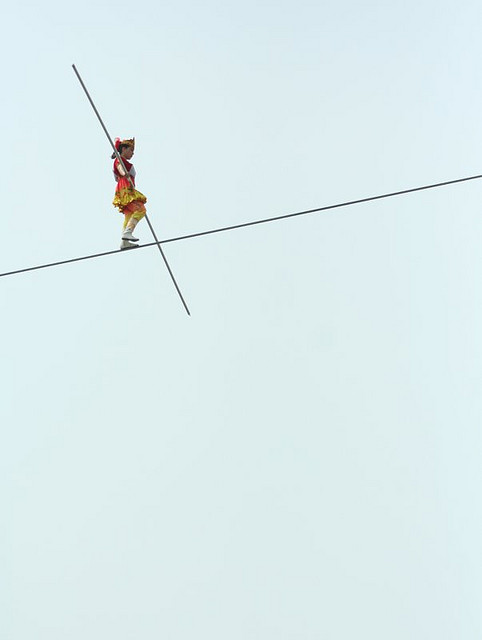
    yes you can motivation inspiration<image via aigle_dore on flickr>

    Shaking up your life is terrifying.

    Too often we’re unhappy with the way our lives are going.

    And that’s not necessarily a bad thing. Acknowledging a problem is the first step toward rectifying it.

    But you have to know what you want.

    Ain’t no use wanting to make a change but not knowing what that change should be.

    That old adage – failing to plan is planning to fail – it’s true.

    It’s not enough to decide you want to be all Brad Pitt in Legends of the Fall and take off for years to do your own thing – kill zebras, sail on epic ships, visit Indian gurus and who knows what else – they were pretty vague in that film.

    You need an end goal and you need to lay out the steps to take to reach that point.

    And if you’re really committed to it, you’ll have to get past the fear.

    You’ll have to stop throwing up every conceivable barrier, every reason why you can’t.

    Maybe you’ll find you don’t really want to follow through. Fine.

    But if you DO, then you gotta balls up and take action.

    Tell me.

    Do you ever get frustrated by people who won’t take steps to take control of their own lives?

    And how do you determine whether you really, really want something, when it’s not something you can realistically trial beforehand?