fbpx
  • Guest post: How lump sum payments can get you out of debt fast

    This is a post by Katie, who writes for numerous daily news websites and blogs about personal finance and saving money. For more information on dealing with debt and advice on saving money, Katie recommends visiting the Fox Symes blog.

    Debt is one of those things in life that you know you’d simply be better off without, so if it’s already looming over your head you’re probably wishing there was a faster and more effective way to get rid of it. Lump sum payments are a beneficial approach to clearing debt faster – here’s how it works.

    Reducing the Term

    By paying lump sum payments you’ll be reducing the time it takes you to pay off your debt. The larger the lump sum amount, the smaller the remaining debt, so each time you make a lump sum repayment you’re taking time off your loan, not just money.

    Reducing Interest

    The interest on a loan is calculated based on the remaining amount. Each time you make a lump sum payment you’re reducing the remaining amount and, therefore, reducing the calculated interest. This means you’re actually reducing the amount of interest you’ll be paying overall, and consequently shrinking the end amount you’ll have paid.

    Earning Interest vs Paying Interest

    Saving all of your money rather than using at least a portion of it to make lump sum payments on your debts is usually the less favourable option in terms of interest. In most cases, the interest you’ll be earning by keeping the money in a savings account will be much less than the interest you’re being charged on your debts. It may be tempting to hold on to the money in savings, but it’s costing you much more to keep it.

    Removing the Temptation to Spend

    By paying lump sum amounts on your loan you’re removing the temptation to spend that money on other things. Once it’s been paid back to your debtor you can’t spend it, so it’s getting you out of debt rather than helping keep you there.

    Beating the Interest Free Periods

    It’s particularly beneficial to pay in lump sum amounts if your debt relates to a credit card, loan or purchase boasting an interest free period. Generally this is a tactic to draw in customers who are often unprepared for the high interest once this interest free period expires. By paying off your debt in lump sum before the interest free period is up, you could be saving yourself a huge amount in interest and fees, and paying much less overall for your purchases.

    Debt Consolidation

    Taking out a loan for debt is another way of paying off owed amounts in lump sum. Through debt consolidation all of your smaller personal debts are paid off by a new loan. If your loan for debt is through a reputable provider like Fox Symes, for example, ideally you will be able to benefit from a lower interest rate and perhaps more favourable terms.

    Voluntary Repayment Bonus

    If your debt is a student loan, the Australian government offers a voluntary repayment bonus for students and/or graduates making lump sum payments on their HECS-HELP loans. This means a bonus of 5% is offered for repayments of $500 or more, credit 5% of the payment back to the student’s account. This is a great way to clear your student debt much faster and reduce the end amount paid. (Ed: The IRD offers a 10% bonus on extra voluntary repayments you make on your NZ student loan.)

    It’s pretty simple really; the more you pay, the less you owe. Lump sum payments are the best way to manage debt, and while you may feel the sting of larger payments now they’ll save you much more money in the long run.
     

  • My fear of commitment

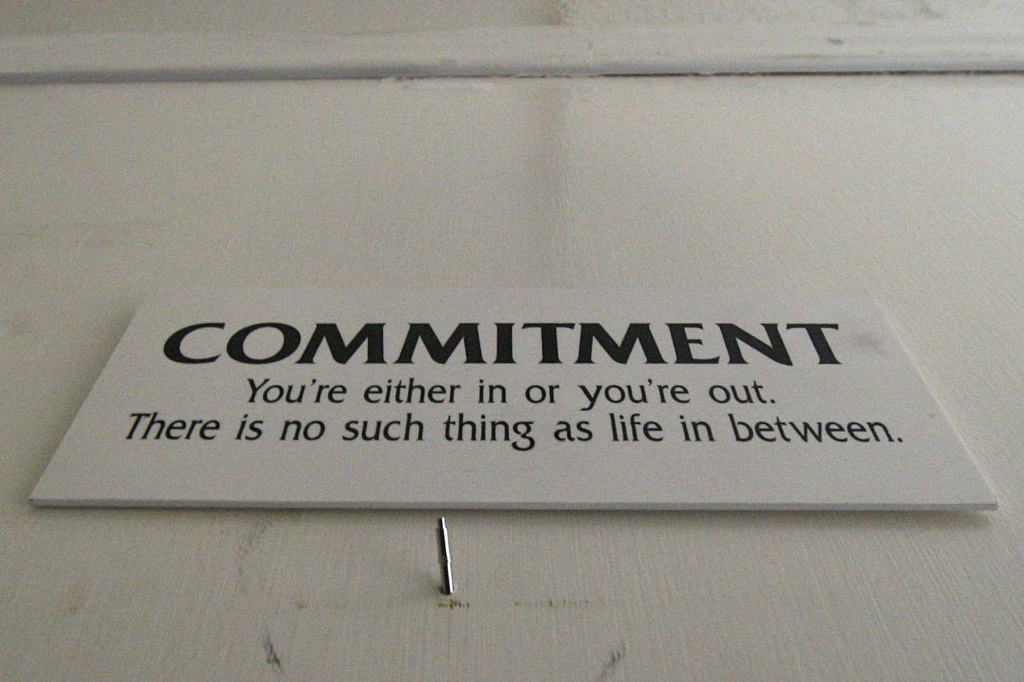
    fear of CommitmentConfession: I have a fear of commitment.

    I refuse to commit to consumer contracts. I chose Orcon as our ISP partly for the prices and partly because they had no 12-month fixed term minimum contracts. Until I got a work phone, I was always on prepay, partly for the prices, and partly because there were no contracts involved.

    I reluctantly committed to a contract with Sky TV at the boy’s request, and to a fixed lease on this house because it’s getting increasingly hard to rent anywhere on an open-ended basis.

    My fear of commitment extends to, well, almost everything. I was a somewhat lax attender of quiz night with colleagues at my old job. At work, several sports teams have been formed, but even if any were sports I enjoy (which are few and far between) I balk at the thought of committing one evening a week to organised ongoing activity.

    I haven’t committed to any regular organised extracurriculars since high school.

    It’s also a factor in the rest of my life. This house is temporary. I don’t care about decor. I like white walls. I don’t give two figs about having Young House Love-esque surroundings. I genuinely don’t understand why people paint accent walls – or why anyone would want a purple, green, or yellow room.

    But you know one thing I would like? Decent appliances – a fridge, a washing machine – and cookware.

    I don’t want to commit to nice things until we buy a house of our own. Moving is a pain, and flatmates have wrecked too many of my belongings in the past (we live alone now but who knows what the future will bring).

    But it would be amazing to have a decent frypan, a fridge that doesn’t freeze all vegetables within it, a freezer that’s not 40% icicles, and a washing machine that doesn’t sound like it’s about to explode on the spin cycle and works in cold water mode.

  • Three reasons why I want to buy a house (and reasons why I won’t)

    1951 ... Farnsworth HouseSettling down/making it your own

    I don’t give two hoots about decorating, but I would dearly love to settle in with permanent furniture, appliances, and most of all, insulation. Sadly, this is the exception rather than the norm in NZ houses. I’d be happy to pay to insulate my own home, but not while renting. In the meantime, we suffer on…

    T also wants a dog something chronic. I’m not an animal person AT ALL, so renting has been a good way to shut that down. But I’m willing to compromise when we have a place on our own, particularly if there’s any security benefit to be had (we’ve been burgled too many times).

    Putting money into your own pocket

    I don’t see property as an investment, nor do I believe rent is dead money. But given housing is our biggest expense, it sure would be nice to be funneling that into an asset of our own – and mortgage rates right now are reasonably low, with home loans in the 5% bracket.

    I don’t want to be renting when we have a family

    Kids are in the 5-10 year plan. Still a while away, but wouldn’t you want to enjoy your first house for a while before they arrive? And with us getting married this year, this is only intensified. I always thought I’d get married closer to 30 and we’d be in a position to buy a house straight after, but things won’t be happening that way.

    Alas, buying a house is not on the cards right now. Why not? Let me count the ways…

    The moolah factor

    Houses in Auckland are pricey. (For New Zealand as a whole, the median household income is just shy of $80,000 and the median house price is $389,000 – in Auckland, that would be barely entry level. Affordability as judged by the house-price-to-income ratio is nearly 5x, more so for Auckland average house prices – over $600,000 for the city area and $450,000 for the western suburbs, where we’d probably be forced out to.) We definitely don’t have anywhere near enough for a down payment yet. And let’s not get started on property rates, or the fact that we would have to buy a house further out, forcing us to get a second car. $$$$$$ all over the show. It’s a huge financial undertaking we’re just not equipped to make right now.

    Flexibility is key right now

    We might want to move away for a while or go travelling. T is still figuring out a career. Basically, it’s still too early to settle down and commit to a mortgage.

    How stable are our jobs anyway?

    T is an hourly worker and his income often varies. And working in publishing, I can’t say I’ll ever really feel secure in my job.

    What, if anything, is holding you back from buying a place? Or if you own your own house, how did you know it was time?

  • The elements of a perfect bank

    I’ve been with my bank for about 10 years, ever since I paid a visit to the branch down the road from my house and opened up my first account on my own. Most of my friends were also with ASB, and are to this day.

    Inertia is what keeps most people where they are. It’s a pain to make changes in your financials, and changing banks is a pretty major undertaking. It seems too hard, too complicated, too time-consuming.

    But for me, it’s more than that. I can’t say my bank has ever really rewarded me for loyalty (after all, I’m small fry) but I genuinely think ASB is truly innovative and hands down has the best internet banking facility out there. Given how I like to manage my finances, this is top of the list for me. I’ve seen National, ANZ, Kiwibank and BNZ internet banking in action (albeit, some of them not for a couple of years now) and ASB has always been way ahead of the curves feature-wise.

    I’ve had the opportunity to give direct feedback in the past through a one-on-one market research session, and the one feature that I really wanted turned out to be something lots of others had requested, and was implemented by popular demand. A company that listens to customers is a rarer beast than it really should be. And a preview of new features in the mobile app (now out) definitely cemented that – the integration with TradeMe is a stroke of genius. Anyone who’s ever used TradeMe to buy anything (which is most of the adult New Zealand population…) knows what a pain organising payment can be (unless it’s a bigger seller that accepts Visa). Linking in with TradeMe’s API to facilitate easy transactions eliminates most of that hassle.

    Overall, I’m pretty happy with my setup – no monthly fees, a high interest online savings account, a Visa with low fees and a rewards programme. Even better would be a no-fee card, but I’ve yet to find one of those in New Zealand. The only reason I might anticipate changing in the future is at the home-buying stage if another bank has a better deal on a mortgage.

    What is it that keeps you loyal to your bank? Would you change banks for a better offer?

  • Reflections on a year of no shopping

    a year of no shopping

    <image via jostel on flickr>

    It’s official: I don’t give two shits about fashion.

    Of course I wish I was more hip, thanks to the infinitely more stylish ladies in my office. (Still has nothing on the time I worked in the office of a fashion magazine.) But the thing about maturity (ha) is you come to realise what your real priorities are – and clothing and accessories are not among mine.

    I set myself a no shopping challenge this year, and I can’t say I’ve missed it. I don’t miss malls. I had no idea what ‘peplum’ meant when one of my best friends dropped it into a conversation, and I didn’t care (I’m googling it now).

    Basically, I was only allowed to replace things I actually needed. And my trip to Sydney in July proved the perfect time to do so, where I picked up two pairs of flats, a bag, and a wallet (the latter not strictly being essential at the time, but everything else was definitely a need).

    The canvas shoes (Ked-style ripoffs) that I put through their paces walking all over the city got waterlogged on the first (or was it second?) day, and while I could handle the squelching, I could not deal when the sole actually cracked – it literally split across the middle. So off I headed to a cheapie shoe place – I forget the name; we don’t have it here in NZ – and bought two pairs of ballet flats for $30. Expensive flats have never worked out for me, so I stick to the low end. Boots, on the other hand, are a different story. (That reminds me – I got my one pair of black leather boots resoled this winter, but they’re not going to last another season. Sigh.)

    Elsewhere, I’ve been lucky in that I scored free moisturisers and makeup through work, and the goodie bag at Semi-Permanent included a full-size tub of my holy grail: Trilogy Everything Balm. It almost made up for the fact that lunch wasn’t provided on either day, forcing me to go out and buy food.

    The one thing that’s still on my wishlist? A killer leather jacket. Unfortunately, I have neither the budget nor inclination to find the perfect one, unless it falls out of the sky. Cloudy with a chance of leather jackets? Yes please.

    What’s your shopping philosophy? Any standout purchases this year? What’s on your wishlist?

  • Then and now: frugality through the years

    My last post saw me reflect on the life lessons I’d learned since graduation.

    Today, I’m turning the lens on my spending habits. Am I still super frugal? Has lifestyle creep stealthily draped its cloak around my shoulders?

    Well, yes, in a few ways.

    We pay more in rent, which was a deliberate choice I’m happy with.

    In 2007, my first year of university, we were paying $260 a week for a one-bedroom apartment. We actually paid less – $195 – for the next couple of years in a shared house. I think our next place was about the same, or slightly more, and then we moved to a studio for $250 after I graduated. It wasn’t till more than a year later that we moved to our current house.

    We now have Sky TV. 

    At our first shared flat, the flatmate from hell had Sky in his room and the boys would all crowd in to watch wrestling on Sunday nights. At the second, the executive decision was made to get Sky for the house. And from then on, there was no turning back. We moved out on our own, and now we foot the entire bill ourselves. Plus all our other essential utility bills have increased. Yay, inflation.

    While our food budget has remained the same (woot!), occasionally we splurge a little on a fancier place to eat out, or on more gourmet ingredients (meats, cheeses, etc).

    Weekly supermarket trips used to be a thing we did together. Now that I’m a more confident parker, and have actually learned to kind of like the process of picking out the best, freshest produce and finding bargains among the specials, I’ve taken over grocery shopping alone for the most part. It helps that now we’re only a couple of minutes away from both Pak n Save as well as an awesome Asian shop – T is a bit wary of the Asian place, but I have no qualms, so I head there almost every week and save buttloads on fresh food in the process. Our eating out budget is also the same.

    I still don’t pay for books (that’s what the library is for!) and I don’t pay for music.

    Given that I almost always have access to wi-fi, streaming songs is where it’s at these days.

    I spend less on beauty care.

    I used to obsess about my skin, and while skincare and makeup was never a huge part of my budget, I did make sure to pay for quality stuff. Nowadays I can get freebies in my line of work or through mystery shopping – but I don’t need them. I hardly ever wear foundation, I wash my face with water only (which wouldn’t work if you wear makeup, or have a different skin type – I tried the water only method when I was younger, oilier and pimplier, and it was a flop) and generally operate on the ‘less is more’ mantra. I put as little on my face as possible, and my uber-sensitive skin is all the better for it.

    I still buy clothes secondhand or on sale.

    And this year I haven’t bought any, except for two pairs of flats when my old shoes fell apart. Frugal living FTW.

    I’m happy to live a reasonably ascetic daily life, in order to direct my money toward travelling and seeing new places.

    Have your spending habits changed over the past few years?

  • Work lunches: bring your own, save money

    Bring lunch to work and save moneyYou might have noticed a distinct lack of monthly spending recaps on this ole blog of late. I’ll admit, I’ve been less than upfront about our spending recently.
    Things have been out of whack, with our holiday (which I did recap financially in this post) putting money into T’s bike, and as I mentioned yesterday, a month of lost income.

    That doesn’t mean I’ve been entirely ignoring our financials. Reviewing the last couple of months made it clear we’d been paying for convenience too often, and that T had been nickel and diming us to death with purchases here and there (aside from his regular fun money, which is $80-100 a week, about half of which goes on lunches, $20 on poker night twice a week, and the rest of random snacks/golf/the rare night out, etc. To a tightwad like me, who hardly spends anything in a normal week, it’s insanely extravagant – but I can also see how fast that can go given how much things actually cost).

    We’re trying out a reduced allowance for him, in tandem with him starting to bring his own lunches to work. I used to make his lunches, but eventually I gave up as half the time he didn’t eat them and in all honesty, it’s enough of a grind organising my own. Now it’s all on him.

    The first week he managed to forget to bring his lunch one day, and on another I volunteered to make it because he was feeling sick in the evening. My gut feeling is this probably isn’t going to last all that long, and not for 5 days a week, every week. (I usually batch my lunches in two lots, cutting down prep time, but he’s more into sandwiches made daily.) The thing is, this is an area with definite potential for savings, and he really doesn’t make enough to justify buying food every day – I just don’t know if he’s cut out to put in the effort on this count.

    How does your household manage work lunches?

  • A month of reduced income (and the risk that comes with trading time for money)

    The risks of trading time for money

    While I’m usually all for writing about what’s going on in my life, for some reason I didn’t really want to write about what happened last month while it was going on.

    A couple of days before we headed off on our two-week campervan trip, T strained his arm at work and got sent home. If you’ve got an elephantine memory, you might recall he sustained some nerve damage in a mosh pit over New Year’s. This was a flareup of the same thing.

    He had to have all sorts of scans, which obviously had to wait until our return. (Thanks to public healthcare, we only had to pay $37 for one of the tests.) It took a few weeks to get all those appointments done and dusted, only to return with no conclusive results.

    A month of no income

    When all was said and done, he’d been off work for a solid month; they wouldn’t take him back till he was cleared as his job involves heavy lifting. I covered all our expenses, meaning no savings for October. (Embarrassingly, even though keeping an eye on our money was more important than ever at the time, I avoided it as much as possible. My slacking off led to a slide into overdraft at one point – and yes, the sting of accompanying fees.)

    In the end, the doctors’ findings were inconclusive. And while ACC is meant to cover your lost income, up to 80%, as we found out, ACC won’t fork out without a defined cause.

    Back at work, T’s boss was MIA to start with, due to his own health concerns. It took a few weeks, but eventually HR got up to speed with the situation. At this stage, the gist of it is: the company won’t pay him for the time off. (And in terms of both legislated sick leave and annual leave, T is currently running on empty anyway.) They will back him up against ACC, however, and will go in to bat for him. Fighting ACC is not something I could be bothered with, quite honestly (if you’re in New Zealand, you’ve probably lost track of all the awful ACC stories that’ve been in the news this year), but if the company is going to spearhead it, we’ll go along for the ride.

    So at this stage, will we see any money for October? Quite possibly not. I’m not counting on anything. Always be prepared for the worst case.

    And while we’re on that note, the IRD owes him $500 odd as a tax refund. We got the notice a couple of months ago, but no cash has eventuated (and two online queries have gone unanswered). Anybody else still waiting on their tax refund for the 2011-2012 year?

    Protecting your income

    That got me thinking: even for the well-insured, severe or chronic health problems can really impede you, especially taking a longer-term view. (Funnily enough, T’s bank called him up, concerned about the distinct lack of money coming into his account. They also tried to pitch him on their income insurance policy, which apparently offered 50%.)

    For example, another friend (our heinous ex flatmate) recently had knee surgery and basically can’t work for a year. It’s not just you who’s affected. Your family, spouse, kids are all impacted if you’re off work for some time, both financially and in terms of other kinds of support that you might need. Your skills can stagnate and time out means missing out on retirement savings and puts you on the back foot for future pay rises.

    T’s job is somewhat physical, but by the same stroke, he’d hate to have a desk job. He’s a big guy but his body is way older than it should be. A 24-year-old should not have so many aches and pains, but I suppose years of sports take their toll.

    As much as the trades are necessary and even lucrative industries, there’s so much risk involved. You’d really need good income protection insurance to feel secure.

    If I sprained my ankle or broke my leg, I could still work. Maybe not so much if I broke my arm (I’d be very much slowed down, if not more or less out of action) but as a desk jockey/knowledge worker I am not automatically excluded from work until I fully recover.

    The thing about trading time for money, as most of us do, is that if you can’t work, you can’t earn money.

  • How I’m saving money this Christmas

    How I'm saving money this Christmas

    It sucked growing up and not getting birthday or Christmas presents.

    But now that I’m an adult, I’m really glad my family plays it that way.

    Now that I don’t work public holidays, and will therefore be seeing them on Christmas day, I’ll bring something along – but it won’t be anything major. Baking. Books, maybe – we’ll see what freebies come my way at work within the next month (!!!).

    For T’s side, I’m planning to redeem a bunch of online survey points for various vouchers. I know a lot of people are vehemently opposed to vouchers, or worse, cash, but I’m a big fan of letting people spend as they wish, and I don’t think they will mind.

    As for T himself? I’m still not sure. He hates that I never want anything (seriously, the best gift anyone could ever give me is cash, which I would save), but honestly, he doesn’t make a whole lot anyway. My Scrooginess does not extend to him, so I hope he won’t want anything too extravagant or outrageous. I’m pretty sure I bought him a new release Xbox game last Christmas. My Scrooginess, however, does extend to a preference that we go shopping for our presents on Boxing Day when the sales are on, if we’re doing gifts.

    Have you started your Christmas shopping? Do you save or splurge when it comes to presents?

  • Online shopping: a New Zealand perspective

    Since I got my first and only credit card back in 2007 (I still have the same one, although obviously not the exact same physical card as I’ve been through a couple of expiry dates, but the same account nonetheless) I’ve made many big purchases online. Mostly things like hotel reservations, flights, concert tickets.

    When it comes to buying physical goods online, I stick to smaller items. Guitar strings and contact lenses are SO much cheaper online than in shops. I bought my voice recorder and phone recording adapter online. I’ve bought a handful of clothes online, which is okay when you stick to a label you know and where you’re familiar with their sizing. I even played it risky and bought a bass amp online once (a trusted brand, of course).

    My Pretty Pennies recently had a bad experience buying clothes online, which actually inspired this post. See, I recently made my biggest ever purchase of physical goods online. T bought aftermarket full fairings for his bike (which he’s been working on), which cost not far off $1000. They arrived safely, are the right colour, shape and fit, and allowed for an all-round sigh of relief (although for some reason they packaged and sent one lot of bolts separately. Bizarre).

    To date, my only real damp squib remains picking up a genuine leather jacket off TradeMe that was never, ever going to fit me.

    We suffer from high prices and lack of choice here (on a related note, see Vanessa’s guest post on the headache that is shopping in Canada) though NZ Post has a new service, YouShop, that lets NZ shoppers buy items from US online stores to be delivered to a US address, and then on to their NZ address (circumventing policies that exclude NZ delivery, or impose high shipping charges). So it’s no surprise that online shopping is serious biz.

    That said, I’m definitely cautious about buying things off the internet, a fear that rises in proportion with the amount at stake.
    Here’s what I take into consideration.

    Is it a commodity? If so, it’s probably cheaper online. Books, CDs, etc.

    Can I check it out in person first, somehow? I bought my glasses online, but only after I was able to try the exact same pair on in a retail shop. That  was uber important to me because I have a ridiculously wide head and flat nose/face, which means very few frames fit properly. After that, by all means buy the exact same item online at a major discount.

    What about shipping? Shipping costs can kill a bargain. Apparently everyone loves Asos thanks to its free freight around the world. I’m keeping that in mind for the future (when I’m off my shopping ban), but not knowing anything about their sizing, I’d be wary.

    What do you buy online?