fbpx
  • How to work for free AND have the time of your life doing it

    Diverbo Englischhausen at Schone Aussicht in the Black Forest, Munich - Germany

    So y’all want to know more about what volunteering at Englischhausen was like? Glad to oblige.

    In a nutshell: One week. A group of locals. An equal number of Anglos (English-speaking volunteers). One secluded rural location. Total English immersion, led by an MC and a programme director.

    (Just a note: I’m referring to the German arm of the umbrella Diverbo programme, but there is also a Spanish one, the original one, which runs on the same model and known as Pueblo Ingles. I’m told they party a lot harder and the days start an hour later/finish an hour later. The Spanish one also has a lot more locations. PLUS there’s another held in Ireland, which I understand is for Spaniards as well.)

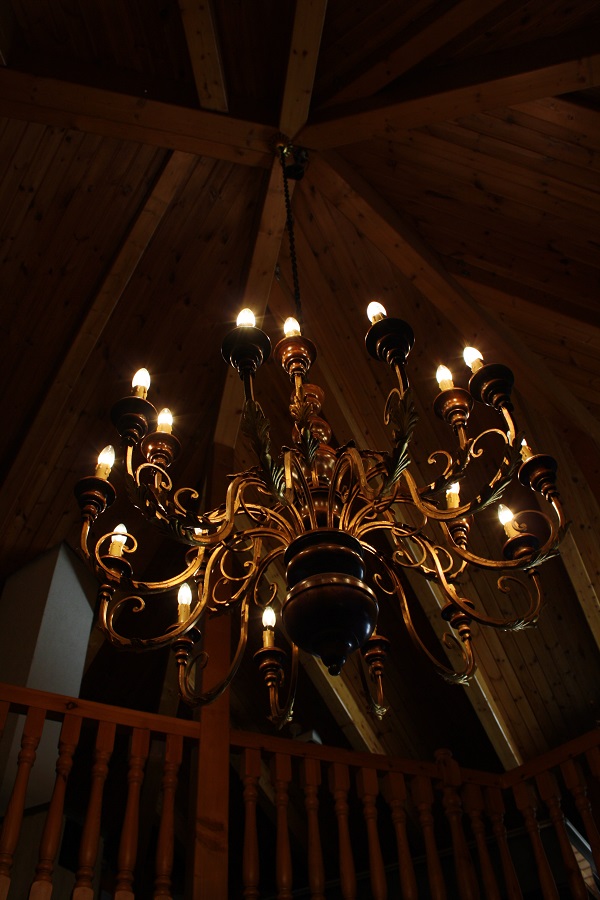
    schone aussicht chandelier

    What to expect

    Do NOT go if you want to improve your German.
    It is not a language exchange. It is an English immersion course, and only English is spoken all week (even to the German hotel staff, though they do understand English, and even amongst the German students themselves). That’s why they want native English speakers as volunteers. HOWEVER, there is an equivalent immersion programme for those who want to learn Spanish, and you should get a discount if you are a veteran (I got an email right after finishing our volunteer week offering one).

    Expect to talk more than you’ve ever talked in your life.
    I may be exaggerating slightly, but if you have a job like mine that mostly consists of sitting at a computer, you probably don’t speak out loud all that often during the work day. The Englischhausen course is based around one-to-one sessions where you pair up with a student and talk for an hour at a time.

    What about? Absolutely anything. Family. Work. Culture. Travel (they were all very well travelled and a bunch had actually been to NZ before). Economics and politics. The way the world is headed. Or simply answering questions about how to phrase certain things, how to construct sentences, whether you would use this word or that word, clarifying the meanings of words or phrases.

    We did this several times a day, with breaks for lunch, phone sessions (the same thing, but talking on the phone), a few group discussion sessions and some group activities. Along the way, we corrected any mistakes they made and exposed them to a lot of new vocabulary.

    Be prepared to work hard and play hard.
    Long days, late nights – especially if you partake in the evening activities, and you definitely should. Ours included a campfire, pub quiz, and a good old party on the last night. Ain’t no better way to bond than by doing the YMCA/Gangnam dance en masse. It’s always the dark horses who turn out to have the best moves…

    You may come out of it a tad sleep deprived, but you’ll have a pretty comfortable stay.
    There’s good food (lots of it) very nice accommodation, a bucolic and isolated location, a sauna, pool, and Jacuzzi (though neither of the latter are particularly hot). I loved taking walks in the forest during our sessions and picking fruit along the way. The wild berries may have been almost microscopic, but the strawberries were the sweetest I’ve ever tasted in my life.

    Think about something you might like to share with the group.
    Every evening we had a variety hour, where a few people took part in theatre skits and others gave presentations. We learned about American football, corporate burnout, heard Swedish and Norwegian songs, and a ton of jokes.

    I think that if you’re from a smaller country, it’s nice to take the chance to share something from it that most people might not otherwise be exposed to. T played a few videos of different hakas and explained the tradition, demonstrated a hongi, and when it came time to share a local song around the bonfire, we teamed up with the sole Aussie in the group to do Pokarekare Ana (which she actually knew the lyrics to, and beat me to suggesting!) It’s funny, because before leaving homeI thought to myself that we should learn a simple song like that in full, in case we were ever compelled to sing an NZ song acapella overseas. We didn’t, though, and had to Google the words for the latter verses.

    There will be tears.
    When you leave, that is. (And maybe in between, who knows?) I wouldn’t say I met any soul sister/brother types, but I enjoyed the company of every single one of the students, from my young and wide-eyed Swiss buddy to the older and more gregarious guys. We also got on surprisingly well with some of the older Anglo ladies, who I think saw their own kids reflected in us.

    IMG_9403

    Apply if:

    You like to talk.
    Self-explanatory, really.

    You’re interested in people.
    Talking is one part of the equation; listening is the other.

    You aren’t a douchebag.
    You’re going to be thrown in with a bunch of people from all different countries, cultures, beliefs, and walks of life. In a situation like this, you don’t want to find yourself going out of your way to avoid certain people all week. But if you DO end up being that person, hey, at least you’re giving everyone else something in common to bond over.

    cute wooden carved animals schone aussicht

    A few last thoughts…

    Overall, our group of students had an incredibly high level of English and we hardly ever had trouble understanding them. It was just a matter of a) practice and b) confidence, both of which I think they gained over the week. I have so much respect for them. I can’t ever imagine improving my grasp of German or Japanese – the two languages I took oh-so-briefly in high school and now remember maybe five words of each – to the point that I could do the same type of thing.

    Most had learned English in school, and some had done non-intensive courses (except one guy who had picked up multiple languages simply by literally learning on the job) but now wanted or needed to improve their fluency for whatever reason. Some were sent by their employers, some attended of their own accord. All were awesome human beings, and I would love to meet them again; I think we convinced a couple to come visit after regaling them with tales  of NZ life, so here’s hoping…

    The course exposes them to a lot of different accents, which I’m sure was super challenging, but also a good thing to be forced to deal with. I found it interesting how some of the Germans were more accustomed to UK spelling/pronunciation/expressions while others were more Americanised. (I don’t think I realised just how large the gap is until this week.) Either way, I had to laugh when one of the students mentioned that when it came time to learn the lyrics to the German song they sang around the campfire, some of them found themselves (mis)pronouncing words like an Anglo would.

    Again, here is the website for Diverbo. Volunteers have their food and accommodation covered (the students pay a fee to participate, obviously) but have to fund flights themselves. Personally, I’m angling to apply for Pueblo Ingles in the future and build a trip to Madrid and Portugal around that…


  • Communication FTW! A week of English volunteering in the Black Forest

    schone aussicht black forest munich bavaria

    I never worried too much about potentially running into language barriers before we set out.  Maybe I should have, but as it turns out, I didn’t really need to. English is truly universal, like it or not.

    While I tried to memorise a few key words from my handy phrasebook in the Triposo app for each new country we entered, 99% of the time it was more of a nice-to-have rather than a need. Anyone in a frontline role serving customers in the countries we visited usually understood a LITTLE bit of English, and with gestures, we could usually bridge the gap if there was one. And of course, anytime you get a group of travellers that hails from different countries, they’ll all communicate in English. It’s a beautiful thing.

    But when you DO run up against someone who speaks absolutely no English? It’s frustrating. Words are my currency, both at work and in, well, LIFE. So this past week, which I spent volunteering at an immersive conversational English language programme in Germany, was incredibly interesting. Meeting these Germans for the first time, when they stuttered and paused and generally struggled to find the right words to express themselves, vs the end of the week when sentences flowed much more freely and they started to correct themselves mid-sentence as needed, was rewarding to the extreme. Language barriers, we slayed you good. 

    The Anglos on the course mainly consisted of retirees or teachers (which makes sense really, since they’re currently enjoying their summer holidays), though I thought there might be more young travellers like ourselves (and apparently the Spanish courses often skew younger). Most of them had taken part in the programme before, so I was a little apprehensive about how we might fare as newbies. Almost everything I know I gained through simply reading a heckuva lot. I don’t know the rules of grammar inside out. I don’t know what a proposition or a participle is. I work on instinct, honed by years of reading and writing. As it turned out, though, I didn’t need to know the WHYs, though it helped when I did.

    It’s always funny when you throw a bunch of strangers together in close quarters, especially for something as intensive as this one-week course. After a few days, you get more comfortable around each other, but tensions also bubble to the surface, certain groups form, and personality clashes become evident. I hate to say it, but a lot of the Americans on the course (who made up the majority of the ‘Anglos’, or English-speaking volunteer teachers) were pretty stereotypically American. The kind who give the US a bad name. Some were lovely for the most part (as long as you avoided saying ANYTHING vaguely critical about the US) while others were of the brash, ‘do you have tea? is it fresh? oh, you don’t have iced tea? well, can I get a pot of tea and a glass of ice cubes so I can make my own iced tea rather than just GET SOMETHING THAT YOU ACTUALLY SERVE?‘ variety. The programme is meant to attract openminded types, but I think we were a tad lacking in diversity within the American contingent in this case.

    What really got our goat was how arrogant they could be. For example, one told T that she found him difficult to understand because he “says things wrong”. Certain words and expressions vary in different parts of the world, right? That’s different, not wrong. Americans say purse, those in the UK and down under say handbag. Vacation versus holiday. Gas vs petrol. And if we must quibble, then let’s acknowledge that British English is much, MUCH older than American English.

    That aside, it was one of the best experiences of our trip – and maybe even of my life. I’m already scheming to return to Europe to try out the Spanish version of the programme, and maybe visit some of the people we met this week.

  • London, how do I love thee?

    Gorgeous old London architecture

    There are many things I love about London. Let’s see:

    The Tube. I am in Type A love with the Underground. Efficient public transport – say what? Until now, it was unfathomable to an Aucklander like me that I could rock up at a station and rest easy knowing a train would be along in a few minutes. On time. No need to check schedules before leaving the house – just turn up and step aboard. It might be a little pricey, but as value for money goes, it beats what I’m used to any day, if only for the fact that you can navigate around different areas of the city by seamlessly changing train lines,

    The parks. Meticulously manicured. Sprawling, magnificent, made for people-watching. With squirrels to feed, fountains, statues, gardens, bikes for rent, even freaking carousels right on the grounds – it’s something straight off the pages of Mary Poppins. Just watch out for the scummy ponds.

    The terrain. It’s flat and oh-so-walkable. Even T traipsed around all day, every day, nary a complaint.

    The buildings. Charming architecture, laden with detail, practically oozing history.

    The recycling. Oh yes. After Asia, I did a little happy dance after seeing not just public bins and recycling bins, but separate bins for different TYPES of materials – paper, plastic, glass … A sight for sore eyes, is all I have to say about that.

    Squirrel on a branch, London park

    Yep, I was pleasantly surprised by Londontown, especially after having just spent two days with a bunch of Brits on a boat in Vietnam and hearing their tales.

    But London has never held a huge draw for me. A place to visit? Hell yeah. A place to live? Don’t see the appeal. I’m in the minority of my graduating class – almost everyone I went to university with is a) currently in London, b) about to move to London, or c) has already done their stint in London and returned to NZ, or perhaps moved on somewhere else entirely. With two-year visas being easy to get and plenty of Kiwis enjoying the privileges of British-born parents, the London OE is still well and truly in fashion, abysmal job market not withstanding.

    So when my London friends and family asked if, having experienced the city for a few days, if I could see myself living here, the answer was still no, for all the reasons I already suspected.

    For one, the weather. You might laugh at this, but if I’m going to leave New Zealand, it better damn well be for sunnier shores. Good weather counts for a lot in my books.

    Prices are also a factor. Some things, like milk, internet and cars, are way cheaper. But the cost of living is pretty high, and starting salaries low (at least in media).

    All the same, London was a fantastic place to visit. There’s just so much to see (I would literally just stroll around gaping up at the buildings on every street). If you were to visit, you’d probably have an entirely different experience; we caught street performers in Southbank and Leicester Square, and spent hours at Hyde Park and Kensington Gardens, which were right next to our hostel. Cyclists, dog walkers, schoolkids, mums and babies, rowers, longboarders, a random guy breakdancing and posing while his friends filmed him – we watched them all go by. Best of all was a serendipitous detour by one of the murky looking ponds, where we caught two giant geese literally racing across the water – wings outstretched, feet skimming the surface.

    Our last day was rounded off with a picnic and nap outdoors, where I wrote this post, killing time before our train up to Edinburgh.

    Juxtaposition FTW at Southbank skate parklondon southbank skate park ballerina photo shoot

    Our street. The Smart Hyde Park Inn hostel was basic but crazy cheapGiant bare trees and beautiful old buildings in Hyde Park / Kensington, London

    It was quite surreal to actually walk through Notting Hill and visit Portobello Market in personCute street in Notting Hill, London

    The view from my cousin’s riverside houseLondon backyard onto the riverBrown terrace houses along the Thames River in London

    Giant horse head (as you do) around Marble ArchGiant horse head, Marble Arch in London

    Where the money gets made (i.e. around the banking district)Banking district, Canary Wharf in London

    Redcoats!

    London guards at museum

    Quietly checking his phone…

    London redcoat guard

    Gothic details
    IMG_8930bLondon gothic buildinglondon brown brick buildings


  • Hotel highlights: Where we stayed in Asia

    nakara longbeach resort koh lanta phra ae

    We’ve experienced everything from the most basic hostels to luxury resorts while travelling in Asia. Gotten used to tiny bathrooms, some with just a shower over the floor, where drenching the toilet as you wash yourself is just part of the package. Dealt with bugs in the shower, sandflies in the bedroom, slept in rooms with windows, rooms where only the bathroom had a window, rooms with no windows at all.

    Here’s some of the places that stood out.

    SS City Hotel, Kuala Lumpur. Our little room was tiny but clean and in good condition, and a place we were more than happy to return to at night – just what we needed.

    Nakara Longbeach resort, Koh Lanta. The nicest place by far of our whole journey – for one glorious night. (We then moved on to the cheaper Lanta Palm Beach resort, which was – more or less – next door. Still fairly nice, with a friendly and entertaining manager, though he was often nowhere to be found.)

    Rainbow Guesthouse/Hostel, Bangkok. Budget accommodation – shabby but serviceable, the rooms were pretty dingy. But the location was top, the inhouse Indian restaurant was pretty rad and all around the friendly staff helped create a great vibe. Just watch out for those low ceiling fans.

    Hak’s House, Siem Reap. Admittedly a little far from the town centre (10-15 minutes on foot), it’s a quiet oasis with a decent free breakfast plus books and TV in the lounge.

    Binh Duong 2 Hotel, Hue. Away from the backpacking street of Pham Ngu Lao, this wee hotel is still handy to everything. It’s right around the corner from a local market, close to the river, and within walking distance of plenty of eateries.

    Pearl Suites Grand Hotel, Hanoi. Super friendly staff, tucked away down a quiet alley in the centre of the Old Quarter, free water, tea/coffee, and an awesome breakfast – what’s not to like?

  • RTW budget: What it costs to travel in SE Asia

    RTW BUDGET BREAKDOWN WHAT IT COSTS TO TRAVEL IN SE ASIA

    So, after six weeks in Asia, what was the damage?

    Confession: I didn’t track those first four days in Malaysia. We were getting settled into travelling, using a lot of cash gifts from the wedding, and spent some on phone calls and taxis to meet with friends and family – but also had some meals covered by them. It was all a bit messy, in short.

    I did, however, track our spending pretty closely from then on. Here are the Thailand, Cambodia, and Vietnam breakdowns.

    Averaged out, that came to…

    NZ $82.10 a day

    Could you do it for cheaper? Yes, absolutely.

    We weren’t out to spend as little as humanly possible. Our budget is more reflective of a flashpacker budget – frugal but not cheap, comfortable not stingy. Starting our trip in Asia meant we could be a little looser with the purse strings and have a bit of a honeymoon phase before entering bona fide backpacker mode in the Northern Hemisphere.

    Our travel style

    Accommodation was in guesthouses and budget hotels, usually about about $12-15 for a double air con room.


    Booking.com

    Food varied widely – anything from $1-2 street food/pastries to $5 meals at restaurants. If you eat like a bird and don’t mind eating noodles for breakfast, you can probably get by on $3-6 each a day . If, like us, you have a normal to large appetite, you’ll spend more – potentially a lot more. (That said, portions aren’t uniform. Some are so small you could practically inhale a bowl in one go; others are reasonably sized, though in most cases I was left wanting more.)

    We love food, so we were happy to splurge quite often. There were plenty of fruit smoothies, milkshakes, fizzy, and sugarcane purchases. (Don’t forget about drinks – you’ll spend a couple bucks on water every day, and you won’t want to miss out on the fresh fruit drinks in Asia. The cheap alcohol tempted even us non-drinkers into a few mixers throughout Thailand and Vietnam.) There were treats like cake, snacks, and ice cream from time to time. But our food expenditure really went up in Vietnam, because T got sick multiple times there, and after the first time, was (understandably) wary of street food. From then on, he stopped eating soup – which is, of course, the staple in Vietnam) – favouring starches and solid stuff, and mostly ate in restaurants rather than on the street. I still ate street food at least once a day, though.

    Transport wise, we mainly travelled overland. Train, bus, minivan … We used public transport a few times, but most of the time, it was taxis or tuktuks. They’re convenient, not too expensive, and most of all, more comfortable for T, especially for journeys where we were lugging our packs around.

  • RTW budget: What it costs to travel in Vietnam

    RTW BUDGET BREAKDOWN WHAT IT COSTS TO TRAVEL IN VIETNAM

    what it costs to travel around the world nzmuse rtw

    We took it slow in Vietnam, spreading our time out over more than a fortnight. I actually wish we’d returned to Thailand earlier and perhaps fitted in a visit to Chiang Mai, but flights were cheapest early in the week, and I wanted to book well in advance in order to lock in good rates.

    I’m also going to include spending for our last couple of days in Asia, which were spent back in Bangkok.

    hanoi main street

    Thailand

    • June 19 – $46.22 (including shared taxis and meals out with our CS hosts; again, free accommodation)
    • June 18 – $57.28 (including transport to and from airports. Free accommodation through Couchsurfing)


    Vietnam

    • June 17 – $56.64
    • June 16 – $15.72 (drinks, etc, aboard the Halong Bay tour, the only exclusions in the price)
    • June 15 – $40.55
    • June 14 – $273.33 (including tickets for overnight Halong Bay cruise)
    • June 13 – $44.94
    • June 12 – $34.49
    • June 11 – $31.42
    • June 10 – $77.05 (including sleeper bus tickets from Hue to Hanoi)
    • June 9 – $71.92 (including motorbike and fuel)
    • June 8 – $73.96 (including motorbike rental and fuel)
    • June 7 – $77.95 (including transport from Hoi An back to Danang)
    • June 6 – $44.55
    • June 5 – $38.73
    • June  4 – $65.34 (including transport to Hoi An from Danang)
    • June 3 – $184.93 (including sleeper train tickets up to Danang)
    • June 2 – $97.51
    • June 1 – $64.29
    • May 31 – $48.11
    • May 30 – $40.92
    • May 29 – $33.12

    There were some expensive days (e.g. Halong Bay tour and restaurant splurges, especially in the very internationalised Ho Chi Minh) and some cheap ones (particularly while T was sick and not eating much). Overall, though, Vietnam was still a very frugal destination – especially now that we look back on it through a European lens…

  • The unglamorous side of travel

    london arch door

    Travelling always looks better from the outside. Instagram snaps, vivid as paintings. Pithy tweets and breathless postcards. You don’t see the slow travel days, the queues, the trips to ATMs and money exchange counters, the quests for toilet paper or pantyliners.

    Don’t get me wrong, I wouldn’t give up this experience for anything. But here’s an unvarnished look at some of the least glamorous parts of travel…

    Saturation point
    You haven’t lived until you’ve experienced the squelch of sweat-soaked backpack straps on bare skin for hours on end. Mmm, moist.

    Tiny thrones
    Or perched sideways on the toilet because there’s no room to sit straight on it.

    Disorientation
    It’s always fun waiting for an hour in the scorching sun for your transfer to the bus. And then getting shunted off that bus later at either a) the border, and only a vague idea of how to proceed or b) in the dark in the middle of a new city with no idea where you are.

    A bug’s life
    Sandflies swarming your bed. Ants, roaches, lizards and more scuttling around your bathroom. Nothing to see here; move on, folks.

    Dodgy doors
    See that light filtering in through the cracks between the panels on the door? The gouges out of the edge on the bathroom door? Ain’t no thang.

    Got any anecdotes of your own to share?

  • How to survive sleeper buses in Asia

    How to survive on sleeper buses

    It seems like an awesome idea. Travel while you’re sleeping – covering precious ground AND saving on a night in a hostel. Depending on the journey, a bus ticket might cost next to nothing – perhaps as much as a bed would. What’s not to like? If you suffer from poor sleep, you’re not alone. As many as 25% of Americans have acute insomnia. But about 75% of those people recover, discover other types of sleep aids aromatherapy is an ancient practice still used today test it.

    What are sleeper buses?

    Sleeper buses may not be as comfortable or convenient as sleeper trains, but they’re a hell of a lot cheaper. Expect anything from upright seats that hardly recline to bunk berths with either fixed or adjustable angled seat/headrest and juuust enough flat legroom for a small to average-sized person.

    Behold, a fairly nice sleeper bus in Vietnam:

    What to bring on a sleeper bus

    There’s only one thing that is an absolute must in my books: Something to cover the velcro on the headrests. As you can imagine, it’s rather painful when that stuff sticks to your hair. A scarf or spare shirt will do the trick. (This doesn’t seem to apply to Vietnam buses, but on budget sleeper buses in Thailand and Cambodia, watch out…)

    Orrrrr, if you wanna get all fancy about it…

    A top quality pillow, if you like your home comforts. I’ve seen a lot of travellers with those U-shaped neck pillows from The Comfy Traveler.

    A sleep mask, if light bothers you. You probably won’t have control over the aisle lights, and other passengers in nearby seats might keep their personal ceiling lights on or inexplicably decide to start snapping photos of each other, sending camera flashes richocheting around inside.

    Earplugs, if you’re sensitive to noise. Sometimes your fellow passengers will have zero interest in sleeping (though hopefully they’ll turn their headphones way down). Some will snore or sleeptalk. Once in a while your driver might think it’s a good idea to blast dance music at top volume. You just never know.


    Are sleeper buses worth it?

    Well, you save on a night’s accommodation, but sometimes it evens out. You’ll never get as good a night’s rest as you would in a real bed. Worst case scenario, you spend the rest of the day crashed out in your next room, recovering from the journey.

    If, like me, you can sleep anywhere and are on a tight budget (or timeframe), then sleeper buses might be the way to go. It’s really a matter of priorities. Since I’m travelling with T, who’s about three times my size, we’ve learned to go for more comfortable options if possible.

    In Thailand, I would go for the train; the price difference is negligible. In Cambodia there are no trains, but you could opt for a daytime bus journey instead. In Vietnam, the train is so much more expensive that I’d say buses are probably worth the savings (or, if you’re pressed for time, flights are not much more than train tickets).

    Google, Google, Google

    The best way to ease the journey? Use a reputable bus line!

    Research the best bus companies for your chosen route and go direct to their office. Booking a seat through your hotel or a random travel agent can be risky; who knows what random, scruffy bus line you might end up on.

    The good ones tend to provide blankets and water and communicate clearly when there’s a rest stop or when the final stop is imminent; others nothing at all.

    Believe me, budget sleeper buses are THE PITS.

  • Vietnam: Love it or hate it

    halong bay sunset
    Halong Bay at sunset

    Vietnam is a polarising destination. Without exception, I’ve found friends, couchsurfers, and bloggers either adore the country (rare), or found it a disappointment (the majority).

    I get it. It’s understandable why some find Vietnam underwhelming.

    Getting sick at some point seems par for the course. That can easily sour your experience, logical or not.

    Getting ripped off is also part of the deal. Be it paying twice the highest amount listed on the side of the food cart (while the tourist couple ahead of you were only charged a 50% premium) … or getting charged a different price for the exact same item at the exact same shop by the exact same person on different days … or that pause when a random stallholder throws out a price no doubt conjured out of thin air – probably the highest number they think they can extract from you. But hey, are you really going to quibble over a few cents here, a dollar there?

    For all that, though, I’m in the first camp.

    war remnants palace saigonwar remnants palace saigonwar remnants palace saigonwar remnants palace saigon

    Scenes from the Reunification Palace

    I’d decided I liked Vietnam already by the time we got off the bus.

    The drivers seemed to stick to their side of the road most of the time. The heat in Ho Chi Minh seemed downright mild after Cambodia. And our bus stopped exactly where it was supposed to stop, just a few doors down from our hostel.

    I don’t know if that’s because we travelled with a good bus company or if it’s simply a function of arriving during the day. We’d previously always arrived at dawn, when it was still dark or close to it. Result: a busload of disoriented passengers, ripe for scammage from local drivers. Here, just a few drivers clustered around the doorway, and half-hearted would be too kind a word to describe their sales efforts.

    Admittedly, Vietnam isn’t the most welcoming country for tourists. Visas are required for most nationalities, and they’re expensive. English signs/menus are few and far between, though I actually really like and respect that.

    What really elevated the experience for me was the people – the friendly hotel staff in Hoi An, Hue, and Hanoi (not Saigon, though) and the equally friendly couchsurfers we met all through the country. While not many are in a position to host visitors, most are eager to meet up for a coffee or to show you around. Heck, most seem to use Couchsurfing to meet travellers at the local meetups and practise their English – in Hue, I found a local student through her post offering herself up as a free tour guide to tourists. If it weren’t for them, I don’t think I would have rated Vietnam quite so highly. It made all the difference. Little things, like learning what the giant red building you pass every morning is (their high school), or their instinctively taking your arm to guide you across the road, because even after two weeks of acclimatising, getting from one side to the other is still a scary proposition.

    monkeys halong bayMonkeying around at Halong Bay

    As for the eating, I found Vietnamese food surprisingly enjoyable, and downright sublime in some of the central regions. I didn’t really know what to expect, and I was pleasantly surprised by the subtle yet full-bodied soups.

    That said, two weeks was enough. Enough of the noodles, the traffic, the sickness, the heat, all of it. I must admit we did very few of the typical touristy things in Vietnam, but I still feel I got as much out of it as I could. (I don’t say ‘we’, because the whole country was a bit of a bust for T, who was under the weather for most of the time.)

    No, Vietnam wasn’t the easiest, but it was a one-of-a-kind experience, and I’m thrilled to have the memories.

    halong bay2000 islands in Halong Bay – the mind boggles. The varying shades of mountain give you an indication of distance

    amazing cave halong bayamazing cave halong bay

    The Amazing Cave, which well and truly lives up to its name.